Discounting solves the objection in the room and creates a bigger one down the line — the moment you lower the number, you've confirmed the buyer's suspicion that the original price was never really the price.
A discount answers "is this worth it?" with "no, but here's less of it for less money." That's not a resolved objection — it's a postponed one. It usually resurfaces at the next decision point, or with the next rep who has to hold the line you gave away.
Price objections are rarely about the number. They're about whether the stack in front of them justifies it.
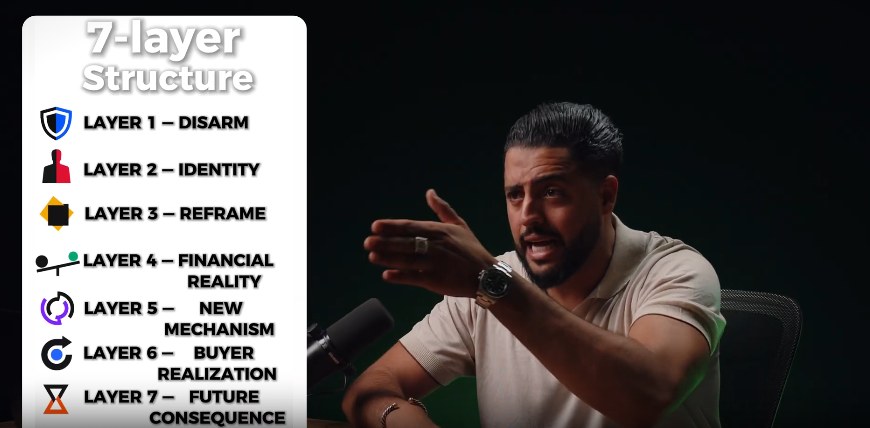
The alternative isn't a better rebuttal — it's rebuilding the value stack in the buyer's mind before price is ever discussed again, so the number stops being the thing they're negotiating with you over.
The exact sequence for doing that — separating price from value, making the invisible parts of the offer visible, and anchoring against what the alternative really costs — is the core of The Frame Game.